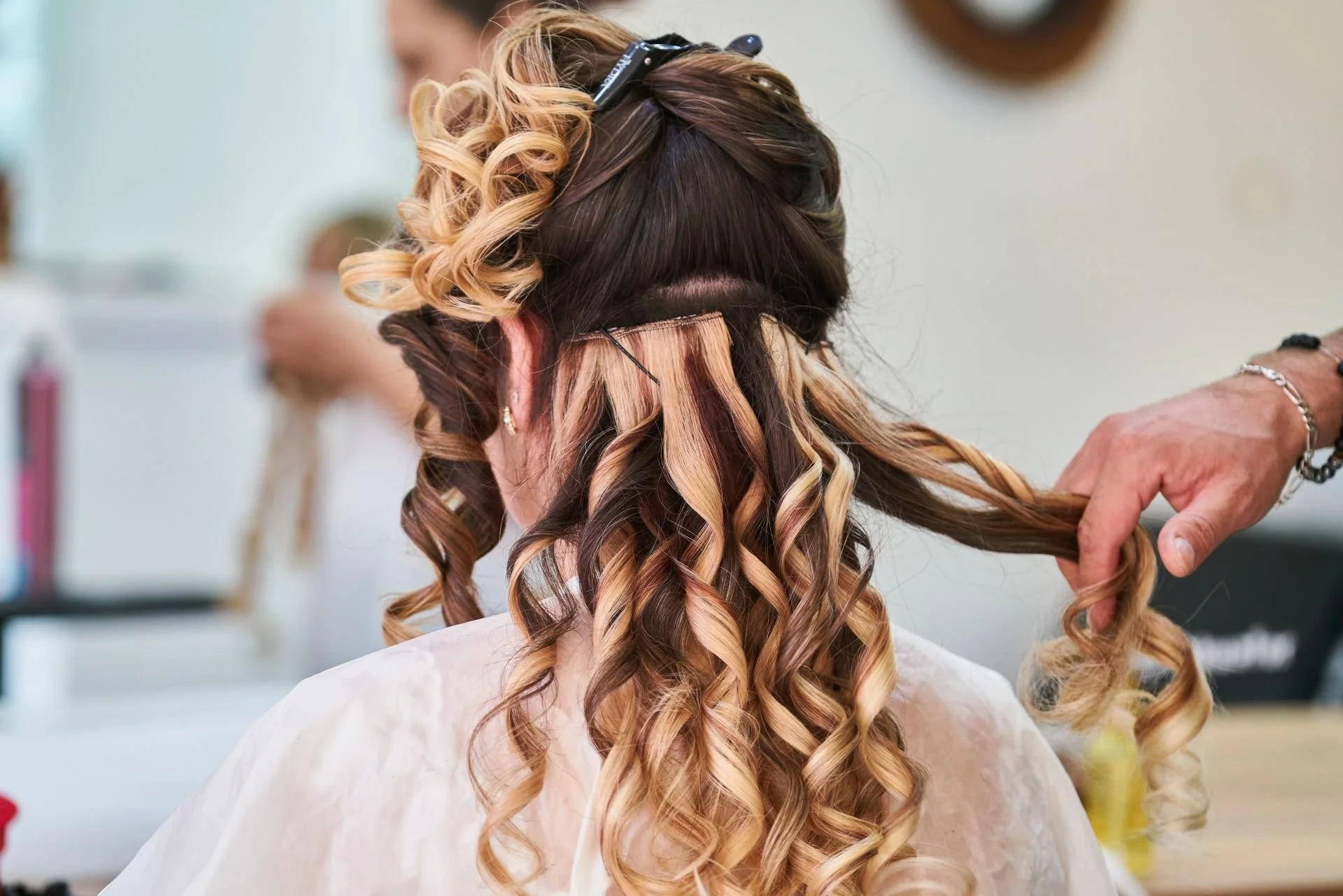
Tape in extensions are the method most people end up with, and the one fewest have had explained. You book, you sit down, you leave with longer hair, and somewhere in the middle a stylist attached a row of wefts you never really saw. Anyone weighing up tape in hair extensions in Portland deserves the mechanical version first.
So here it is: what a weft is, how it holds, how often it moves, and what dermatologists say about wearing extensions without damaging the hair underneath. It pairs with what happens at a first extension consultation.
Quick Answers 1. What is a tape in extension? 2. How often do they need attention? 3. What is the single biggest risk? |
How Tape In Extensions Actually Attach
The method is simpler than the mystique around it, and knowing it turns the aftercare instructions into reasons rather than rules.
What happens during a tape in appointment?
- Hair is washed and dried with no conditioner or oil near the roots, because the adhesive needs a clean surface
- The hair is sectioned in horizontal rows, working from the nape upward
- A slim slice of your hair sits between two wefts, so tape bonds to tape, never to scalp
- Rows sit low enough to stay hidden when hair is tied back
- Color is matched and blended before the cut, which stops a set looking added on
- The set is cut and styled last, so the ends move as one length
That fifth point is where the craft sits. Hair one shade off reads as extensions from across a room, which is why a stylist blends two or three tones. Portland clients can judge that from the before and after transformations rather than take it on trust.
Tape In Compared With the Other Methods
Which extension method suits which situation?
| Method | What It Suits | The Trade Off |
|---|---|---|
| Tape in wefts | Fine to medium hair, length and volume worn daily | A move up every six to eight weeks |
| Clip in wefts | Occasional wear, events, testing a length first | You fit and remove them yourself, every time |
| Individual strands | Precise placement and layered shapes | Longer application, higher cost per head |
| Fusion and keratin bonds | Long wear, strand by strand movement | Heat at the attachment, so the work must be careful |
| Remy human hair | Anyone who wants to heat style and reuse hair | Costs more than processed hair |
| Cuts and color alongside | Blending a set into your own shape | Book the time rather than squeezing it in |
There is no universally correct row there, only the one matching your hair and your week. Someone in Portland who washes daily has a different answer from someone wanting length for a wedding. Searching tape in hair extensions near me will not settle it. Your own hair has to be in the room.
Wearing Extensions Without Damaging Your Own Hair
This is the part clients are told least about, and it is not salon opinion. It comes from dermatologists.
What do dermatologists recommend?
The American Academy of Dermatology publishes advice on preventing hair damage from a weave or extensions, and the headline is tension. Constant pulling can break strands or damage follicles permanently, which is traction alopecia, and extensions are named among the styles that cause it. The instruction any Portland client can act on today: if a style hurts or gives you a headache, it is too tight, so ask for it to be loosened.
- Start with clean, conditioned hair free of product buildup
- Pain or a headache is a signal, not something to wait out
- Wear a style like this two or three months at most, then take a break
- Wash as often as your hair type needs, using a gentle moisturizing shampoo
- Protect the fine hair at the hairline and keep heated tools off it
- Flat iron on dry hair only, low or medium, no more than every other day
Read the American Academy of Dermatology guidance on extensions in full, and its note on hairstyles that pull too. None of it argues against extensions. It argues for a sane tension, a stylist who loosens a row when you say it hurts, and planned breaks. The aftercare routine that keeps a set looking new covers the rest.
How Penelope Approaches Tape In Work in Portland
The studio is a one stylist operation, which shapes the experience more than any technique. Penelope does the consultation, color match, application and move ups herself.
What does an appointment involve?
Consultations are free and answer the questions above with your hair in front of us. Extensions are fitted from 100 percent real human hair in a range of colors and textures, and the studio works with Great Lengths and Bellami. Appointments run Monday through Saturday, by appointment only at Westover Haus in northwest Portland.
- Free consultation before any commitment, color matched in person
- Tape in wefts alongside clip in, individual, fusion, keratin and Remy
- Cuts, color, styling and touch ups, so a new set blends into your shape
- Move ups booked ahead so the timing does not slip
- Payment plans through Cherry, up to $10,000 and no hard credit check
- A 4.9 star rating across 58 Google reviews at the time of writing
If cost is the obstacle rather than the method, the payment plan options and how approval works are set out separately. Cherry runs a soft credit check, offers zero percent financing subject to approval, and quotes a regular rate of 9.99 percent to 35.99 percent, with a down payment sometimes required. Portland clients typing hair extensions near me at eleven at night can start with a consultation that costs nothing.
Book a Free Consultation in Portland
You now know the questions worth asking, so the next step is a conversation. Get in touch to arrange a free consultation and you will get a color match, an honest read on whether tape in wefts suit your hair, and a straight answer if another method serves you better.
Portland Hair Extensions by Penelope | 2328 NW Westover Rd, Ste B, Portland, OR 97210 | (971) 400-8069 | directions and opening hours | recent work and client photographs
Call or text Penelope in Portland today to book your free consultation.
Quick Summary
Tape in hair extensions attach as wefts, thin bands of hair with an adhesive strip along the top edge, applied in horizontal rows so that two wefts sandwich a slim section of your own hair between them. Because the attachment sits at the root and your hair keeps growing, the set has to be removed, cleaned and reapplied higher up every six to eight weeks, an appointment usually called a move up. The method suits fine to medium hair worn daily because the weft spreads weight across a band rather than loading single strands. The real risk is tension rather than the method: the American Academy of Dermatology names extensions among the styles that can cause traction alopecia, warns that constant pulling can damage follicles permanently, and advises that a style which hurts or causes a headache is too tight and should be loosened. It also recommends wearing such styles for two or three months at most before giving the hair a break, and using a flat iron on dry hair at a low or medium setting no more than every other day. Portland Hair Extensions by Penelope fits tape in wefts from 100 percent real human hair, offers free consultations, and carries a 4.9 star rating across 58 Google reviews.
Key Takeaways
- A tape in extension is a weft, and two wefts sandwich a slim section of your own hair
- Rows are placed low enough to stay hidden when hair is tied back
- Expect a move up every six to eight weeks as your own hair grows
- Color matching before the cut is what stops a set looking added on
- Dermatologists name extensions among the styles that can cause traction alopecia
- Pain or a headache means the set is too tight and should be loosened
- Consultations at the Portland studio are free, and payment plans run through Cherry
Frequently Asked Questions
1. How long do tape in hair extensions last in Portland?
The hair itself often lasts several wears if it is good quality and looked after, but the attachment does not. Tape in wefts sit against the root, and as your own hair grows the tape travels down with it, so the set has to be taken out, cleaned and reapplied higher up. That appointment is usually called a move up. Most people in Portland book one every six to eight weeks, and the exact timing depends on how fast your hair grows and how you wash it.
2. Do tape in extensions damage your hair?
They do not have to, and the risk is mostly about tension and time rather than the method. The American Academy of Dermatology warns that constant pulling can break strands and damage follicles permanently, a condition called traction alopecia, and it names extensions and weaves among the styles that can cause it. Its advice is blunt and useful: if the style hurts or feels too tight, ask your stylist to loosen it, and give your own hair a break between sets.
3. How many wefts will I need?
That is a consultation question, not a price list question. It depends on how thick your own hair is, how much length you are adding, and whether you want volume, length or both. A stylist who quotes a number before looking at your hair is guessing. In Portland the honest answer usually arrives after someone has actually sectioned your hair and looked at the density at the back.
4. Can I wash and style tape in extensions normally?
Mostly yes, with two adjustments. Keep conditioner and heavy oils away from the tape itself, because anything slippery at the attachment shortens how long it holds. Dermatologists also recommend using flat irons on dry hair at a low or medium setting no more often than every other day, which matters more once you have invested in extensions you want to keep.
5. Is tape in the right method for fine hair?
Often it is, because the weft spreads the weight across a wider band rather than loading single strands, and the attachment lies flat enough to hide under thin hair. It is not automatic though. Very fine or fragile hair sometimes does better with a lighter set or a different method entirely, which is exactly what a consultation is for.