Most extension conversations start with a picture and end with a price. The part in the middle, where somebody decides whether your hair carries a row of wefts or a hundred separate bonds, determines the result. Individual hair extensions in Portland sit at the precise end of that decision.
They are also the method with the most confusing vocabulary. Fusion, keratin, micro link and beaded all describe strand by strand work, and they are not the same. Here is the plain version, plus how to check that whoever is holding the pliers is certified to. If you are still comparing methods, the guide to hair extensions in Portland is the wider view.
Quick Answers 1. What makes an extension individual? 2. Keratin or fusion, which is it? 3. What does it cost in time? |
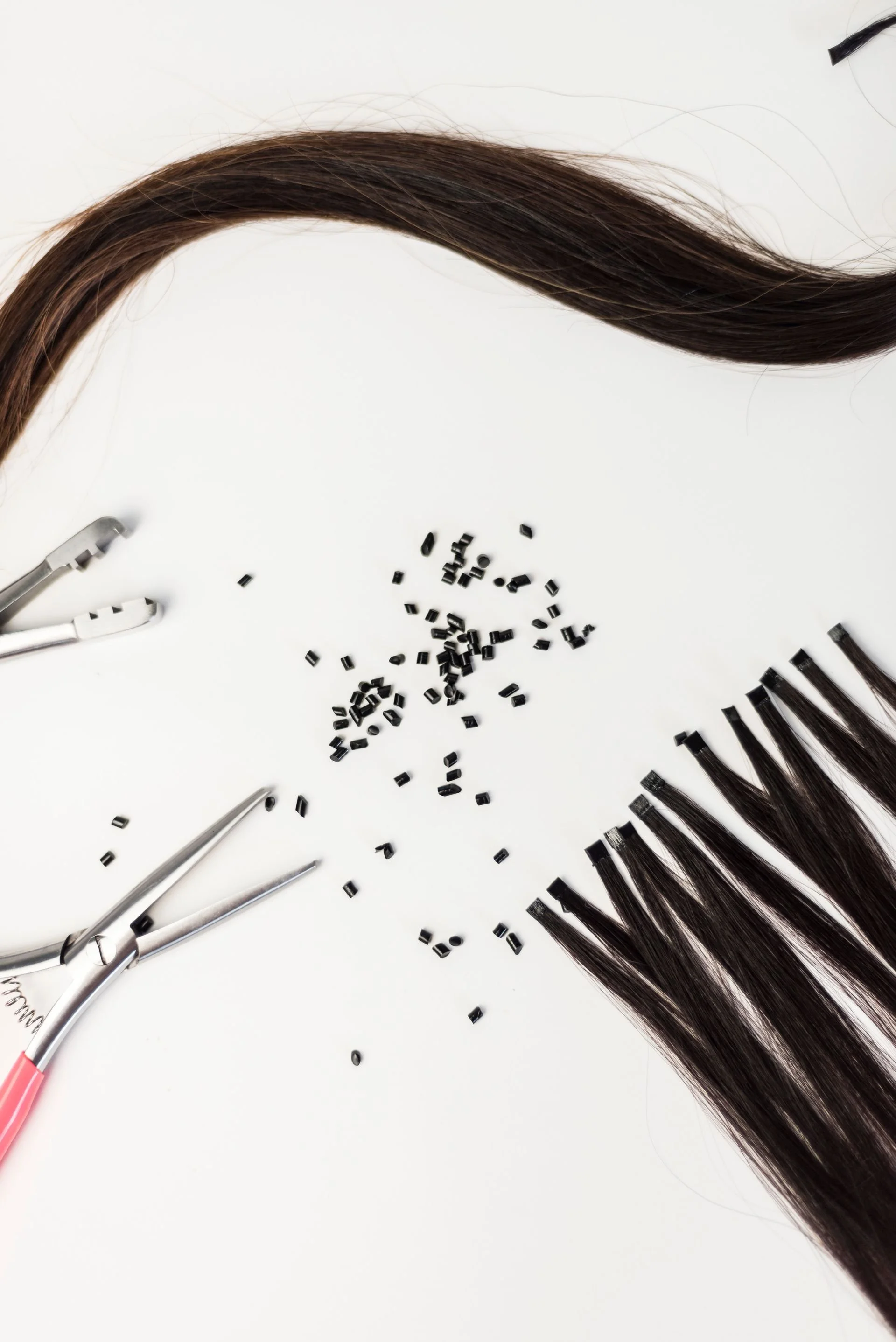
How Strand by Strand Extensions Attach
The mechanics are worth knowing because they explain the appointment length, the aftercare and the cost in one go.
What happens bond by bond?
- Hair is washed and dried clean, with nothing slippery left at the roots
- A very small section of your own hair is taken, often a few dozen strands
- A pre tipped extension is placed against it and either heat softened or clamped shut
- The bond is rolled or pressed so it sits flush and moves with your hair
- Placement follows your own density, so thinner areas get more and strong areas get fewer
- The set is cut, blended and styled at the end, never before
That fifth point is the argument for the method. A weft sits in a straight row; a bond goes wherever it is needed, which is why Portland clients with uneven density or a fine hairline end up here. The thin to thick makeovers show what that targeting looks like.
Fusion, Keratin and Beads Compared
Which strand method does what?
| Method | How It Holds | Worth Knowing |
|---|---|---|
| Keratin bond | Keratin softened with heat, shaped around your hair | The most common individual method |
| Fusion | The same fusing technique, older name | Often used to mean keratin work |
| Micro link or bead | A small ring clamped shut, no heat | Can be reopened and moved up |
| Tape in weft | Adhesive band, two wefts per section | Faster, but placed in rows |
| Clip in weft | Clips you open and close yourself | Nothing permanent, nothing to refit |
| Sew in weft | Stitched rather than glued | Dermatologists prefer it to bonding glue |
That last row is not a preference, it is published advice: the American Academy of Dermatology recommends opting for sewn in weaves rather than ones using bonding glue. It is a fair reminder that method choice has a health dimension and not only an aesthetic one. Anyone in Portland searching keratin hair extensions near me is really asking which of these six suits their hair, and that is a consultation question.
Checking Your Stylist Is Actually Certified
This section exists because almost nobody asks, and it is the easiest quality check available to you.
What certification applies in Oregon?
Oregon regulates hair practitioners through the Health Licensing Office, part of the Oregon Health Authority, and the relevant credential is the hair design certificate. Earning it takes 1,110 training hours and 455 practical operations, plus 20 hours in Oregon laws and rules and 20 hours in career development, and candidates must pass a practical examination followed by two written ones. That is a real bar, and it is public information.
- Ask which certificate your stylist holds, and when they earned it
- Ask how many years they have specifically fitted individual bonds
- Ask to see recent work on hair like yours, not their best ever set
- Ask what removal involves and costs, before you commit
- Ask what happens if a bond slips in week three
- Ask what they will not do, because a straight answer there tells you the most
You can read the Oregon Health Licensing Office requirements for hair design directly. None of the six questions above needs any technical knowledge, and asking them costs nothing. Portland has plenty of skilled extension work available, and the point of a checklist is to shorten the distance between you and it. The mistakes worth avoiding before booking covers the rest.
How Penelope Fits Individual Extensions
The studio is run by Penelope alone, so the person who assesses your density is the person who places every bond and the person who removes them later.
What does the appointment look like?
Consultations are free and happen before anything is quoted, because density and condition decide the plan. Individual extensions sit alongside fusion, keratin, tape in, clip in and Remy options, all fitted from 100 percent real human hair in a range of colors and textures. The studio works with Great Lengths and Bellami hair, and appointments run Monday through Saturday, by appointment only at Westover Haus in northwest Portland.
- Free consultation, with density and condition assessed in person
- Individual bonds placed to your own hair pattern rather than a fixed row
- Fusion, keratin, tape in, clip in and Remy hair all available
- Cuts, color, styling and touch ups so the set blends into your shape
- Payment plans through Cherry, up to $10,000 with no hard credit check
- A 4.9 star rating across 58 Google reviews at the time of writing
If the cost of a full head is the sticking point, the payment plan options and how approval works explain the Cherry route: a soft credit check, zero percent financing subject to approval, and a regular rate of 9.99 percent to 35.99 percent with a down payment sometimes required. Portland clients typing hair extensions near me deserve real terms, not a vague promise.
Book a Free Consultation in Portland
Individual extensions reward a careful assessment more than any other method, so start with the assessment. Get in touch to arrange a free consultation and you will get a look at your own density, a color match done in person, and an honest answer about whether strand by strand work is the right call for your hair.
Portland Hair Extensions by Penelope | 2328 NW Westover Rd, Ste B, Portland, OR 97210 | (971) 400-8069 | directions and opening hours | recent work and client photographs
Call or text Penelope in Portland today to book your free consultation.
Quick Summary
Individual hair extensions are attached one small bond at a time rather than as a band of hair, which lets a stylist place volume exactly where your own hair is thinnest instead of following a straight row. Fusion and keratin describe the same strand by strand family: fusion is the technique of fusing strand to strand with heat, and keratin is what the bond is made from. Micro link or beaded methods are also strand by strand but clamp a small ring shut with no heat, so they can be reopened and moved up. Because every bond is placed separately, a full head is a long appointment and removal is its own visit. The American Academy of Dermatology names extensions among the styles that can cause traction alopecia, warns that continued pulling can stop hair growing back, and recommends sewn in weaves over ones using bonding glue. Oregon regulates practitioners through the Health Licensing Office, and its hair design certificate requires 1,110 training hours, 455 practical operations, 20 hours each in Oregon laws and rules and career development, and three examinations, which makes asking about certification a fair and easy quality check. Portland Hair Extensions by Penelope fits individual bonds from 100 percent real human hair and offers free consultations.
Key Takeaways
- Individual extensions attach one bond at a time, so volume goes exactly where it is needed
- Fusion and keratin describe the same heat fused strand by strand family
- Micro link and bead methods clamp instead of fusing, with no heat involved
- Dermatologists recommend sewn in weaves over ones that rely on bonding glue
- Oregon hair design certification takes 1,110 hours and 455 practical operations
- Six plain questions will tell you more about a stylist than any gallery
- Consultations at the Portland studio are free, and removal terms are worth asking about first
Frequently Asked Questions
1. What are individual hair extensions?
Small groups of hair attached one bond at a time rather than in a band. Each bond holds anywhere from a few dozen strands upward, and a full head can run to well over a hundred of them. Because every bond is placed separately, a stylist can put volume exactly where your own hair is thinnest and leave the rest alone. That precision is the reason people choose the method, and the reason it takes longer than a row of wefts.
2. Are keratin and fusion extensions the same thing?
Close enough that the words are often used interchangeably. Both describe strand by strand extensions held by a keratin based bond that is softened with heat and shaped around your own hair. Fusion is the older umbrella term for the technique; keratin describes what the bond is made of. Beaded or micro link methods are also strand by strand, but they clamp rather than fuse, so no heat is involved.
3. How long do individual extensions last?
The bonds usually stay put for a few months, and the timing depends on your growth rate and how you wash and brush. They then need removing and refitting rather than tightening. The hair itself can often be reused if it is good quality human hair and has been treated well, which changes the running cost considerably over a year.
4. Do individual extensions damage your hair?
The method is not the problem; tension and neglect are. The American Academy of Dermatology names extensions among the styles that can cause traction alopecia, and warns that when pulling continues the hair can stop growing back. Its guidance is to keep the style clean, avoid heated tools on the fine hair at the hairline, and give your own hair a break between sets rather than running one straight into the next.
5. How do I know a Portland stylist is qualified?
Ask, and then check. Oregon certifies hair designers through the Health Licensing Office, and that certificate requires 1,110 training hours and 455 practical operations, plus 20 hours each in Oregon laws and rules and career development, and three separate examinations. A stylist who is happy to tell you what they hold is showing you something useful about how they work.